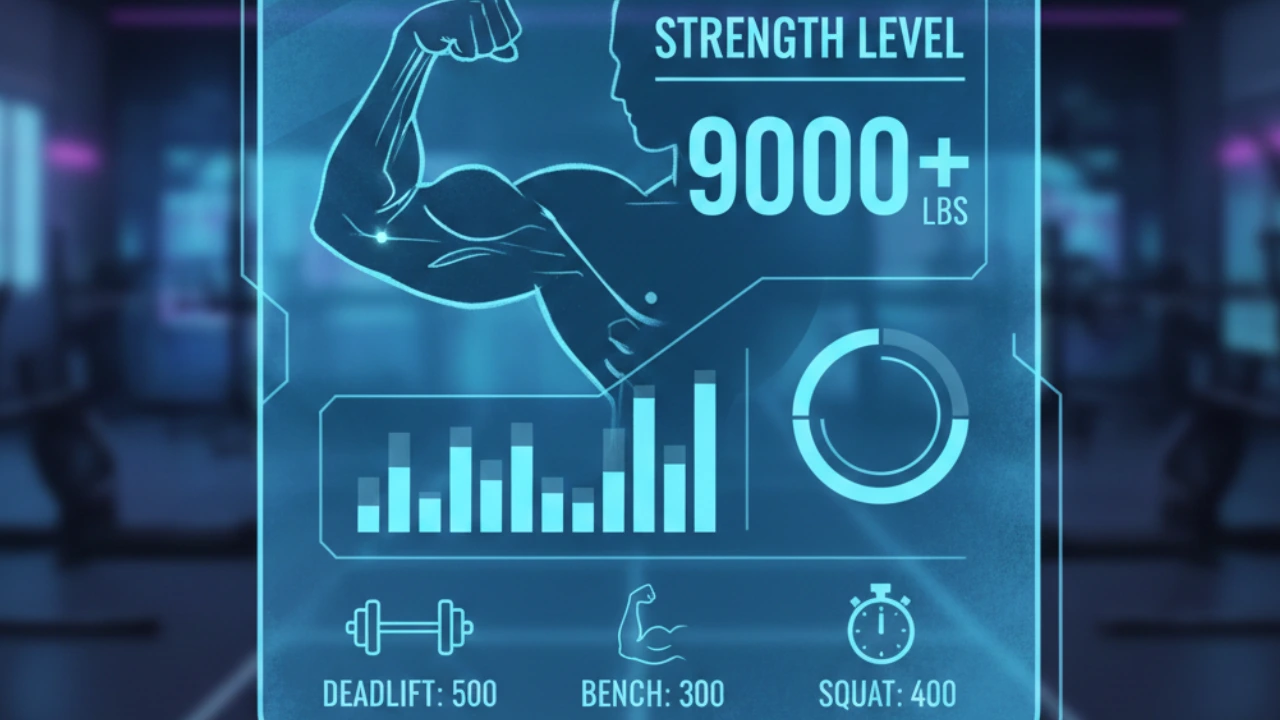
You can deadlift up to 405 pounds. That’s heavy. But everyone knows that you can’t lift heavy weights in the beginning. What is your strength level? Here’s a strength level calculator to help you figure this out.
Here we will see how to use this calculator and how to understand your strength level through it.
Why Your 1RM Alone Can Be Misleading
Lifting 225 lbs on bench means very different things for different people.
- For a 130 lb woman, it is extremely strong
- For a 250 lb male powerlifter, it may be easy
So raw weight alone does not tell the full story.
A Strength Level Calculator looks at:
1. Relative Strength
How much you lift compared to your body weight.
Example:
- Squat = 2 × body weight → very strong
- Squat = 1 × body weight → beginner level
2. Training Experience
Strength improves with time and practice.
A lift done after 10 years of training is different from the same lift done after 1 year.
Ignoring these leads to:
- unfair comparisons
- wrong goals
- bad training plans
- poor sleep
- Not enough protein intake
How a Strength Level Calculator Works
A good calculator compares your lifts with real strength standards from many trained people.
Strength Level Calculator
What You Enter
- Your 1RM (or estimated 1RM) for:
- Squat
- Bench Press
- Deadlift
- Overhead Press
- Your body weight
- Your gender
- Sometimes your age and training years
What the Calculator Shows
It compares your strength to others and puts you into a level:
- Novice – Beginner level, still learning technique
- Intermediate – Good strength, steady progress
- Advanced – Very strong, slow progress
- Elite – Top-level strength, competition level
This helps you understand where you truly stand.
How to Use Your Strength Level the Right Way
Step 1: Find Weak Lifts (Not Just Big Lifts)
You may find:
- Advanced deadlift
- Intermediate squat
- Beginner overhead press
This is great information.
Now you know what to improve.
Step 2: Set Smart Goals
Instead of:
“I want to bench 315 lbs”
Say:
“I want to move my bench from Intermediate to Advanced for my body weight.”
This is healthier and more realistic.
Balanced strength is better than being strong in only one lift.
Step 3: Train Based on Your Level
Your strength level tells you how to train.
- Novice
- Add weight often
- Simple programs
- Fast progress
- Intermediate
- Weekly progress
- Better recovery needed
- Advanced
- Long-term planning
- Very slow progress
- Sleep, food, and stress matter a lot
Training like an advanced lifter when you are a beginner causes burnout.
Common Mistakes to Avoid
❌ Chasing Labels Focus on getting stronger, not just moving up a category.
❌ Bad Form Partial reps or cheating will give false results and cause injuries.
❌ Comparing Yourself to Others Use this tool to improve yourself, not to feel bad or show off.
Example: Jamal’s Strength Levels
Jamal:
- Body weight: 185 lbs
- Training: 4 years
Lifts:
- Squat: 315 lbs (1.7× body weight)
- Bench: 245 lbs (1.32× body weight)
- Deadlift: 405 lbs (2.19× body weight)
- Overhead Press: 155 lbs (0.84× body weight)
Results:
- Deadlift → Advanced
- Squat → Upper Intermediate
- Bench → Intermediate
- OHP → Lower Intermediate
What This Means
Jamal’s deadlift is very strong.
His overhead press is his weakest lift.
His next training plan should:
- focus more on overhead press
- improve squat
- maintain deadlift
Your Simple Action Plan
- Test your main lifts honestly
- Use a trusted strength level calculator
- See which lifts are strongest and weakest
- Set goals based on moving up levels
- Choose a program that matches your level
- Recheck every 6 months
Slow improvement over time is real progress.
Final Thoughts
A Strength Level Calculator removes ego and confusion.
It helps you:
- understand your real strength
- train smarter
- avoid injuries
- build balanced power
Strength is not just about lifting heavy.
It is about measuring correctly and improving patiently.
FAQ
Q: I’m older (40+). Are these standards useful?
Yes. Many calculators adjust for age.
Being intermediate or advanced at 40+ is very impressive.
Q: Are standards different for women?
Yes—and they should be.
Female strength standards are fair and equally challenging.
Q: I reached “Advanced.” What now?
Now training becomes more detailed:
- improve weak lifts
- specialize
- maintain strength long-term
This is where smart training really matters.