Have you tried many diets and not seen any results?
Have you exercised more, cut back on carbs, cut out fat, or eaten at unusual times – but the scale hasn’t moved, or hasn’t moved in the way that you’d expect.
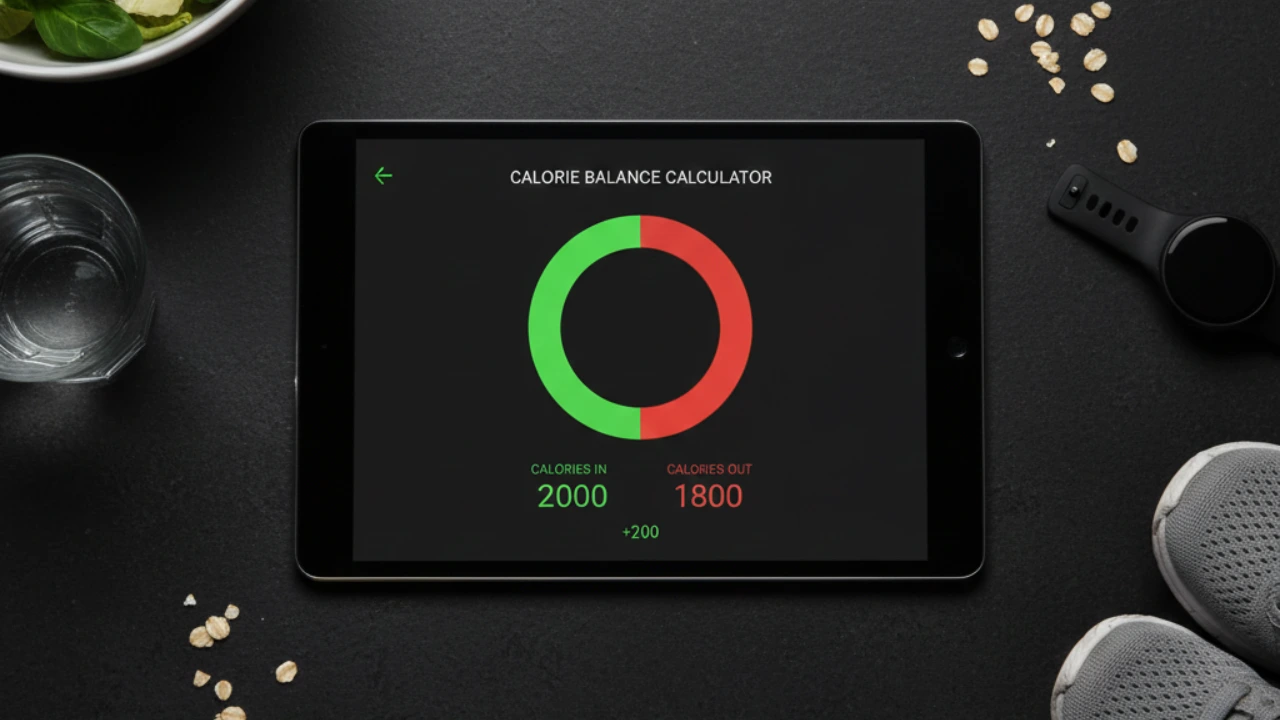
This is where a calorie balance calculator can help you figure out how many calories your body actually needs. When you use it correctly, losing or gaining weight becomes much easier.
Why “Eat Less and Move More” Is Bad Advice
People say this all the time, but it does not help.
- Eat less – less than what?
- Move more – how much more?
Without knowing your personal calorie needs, you are just guessing.
You may be eating:
- too many calories without knowing, or
- too few calories, which can slow your metabolism and make you tired.
A calorie calculator removes this guessing.
What a Calorie Balance Calculator Actually Does
A good calculator finds your TDEE (Total Daily Energy Expenditure).
This means:
How many calories your body burns in one day for living, working, and exercising.
Think of TDEE as your daily calorie budget.
A proper calculator asks for:
1. Basic Details
- Age
- Gender
- Height
- Weight
These are used to calculate your BMR (calories burned at rest).

2. Activity Level (Be Honest)
This includes your daily movement and exercise.
Tip: Most people choose too high. If unsure, select lightly active.
3. Your Goal
- Weight loss → eat fewer calories than TDEE
- Maintain weight → eat the same calories as TDEE
- Gain muscle → eat more calories than TDEE
At the end, you get a daily calorie target made just for you.
How to Use Your Calorie Number the Right Way (4 Easy Steps)
Step 1: Use It as a Starting Point
The number is an estimate, not 100% perfect.
Follow it for 2–3 weeks:
- If weight changes as expected → continue
- If not → add or remove 100–200 calories
This helps you find your real calorie need.
Step 2: Focus on Protein
Not all calories work the same in your body.
2000 calories from junk food is not the same as 2000 calories from healthy food.
- Eat enough protein – helps control hunger and protect muscle
- Aim for 1.6–2.2 grams of protein per kg body weight
- Fill the rest of calories with healthy carbs and fats
Step 3: Track Your Food (For a Short Time)
Use apps like MyFitnessPal or Cronometer for at least 1 month.
This teaches you:
- how many calories are in oil, peanut butter, snacks, and restaurant food
You don’t need to track forever—just long enough to learn.
Step 4: Recalculate When Things Change
Recalculate your calories if:
- You lose or gain a lot of weight
- You start exercising more or less
Your body changes, so your calorie needs change too.
Common Mistakes to Avoid
❌ Big Calorie Cuts
Cutting 1000 calories daily is hard and unhealthy.
Better option: 300–500 calorie deficit.
❌ Eating Back Exercise Calories
Fitness apps often show wrong calorie burn.
If your activity is already counted in TDEE, don’t eat extra calories after workouts.
❌ Only Watching the Scale
Weight goes up and down daily because of:
- water
- salt
- hormones
Also track:
- weekly weight average
- body measurements
- clothes fit
- energy level
Example: Sarah’s Calorie Plan
Sarah:
- Age: 35
- Weight: 70 kg
- Height: 5’6″
- Job: Desk job
- Exercise: 3 gym workouts per week
- Goal: Fat loss
1. Her TDEE
Estimated: 2300 calories
2. Fat Loss Target
2300 − 500 = 1800 calories per day
3. Protein Goal
70 × 1.8 = 125g protein
Calories from protein: 500
Remaining calories: carbs + fats
4. Result
She follows the plan, loses weight slowly, feels energetic, and adjusts when needed.
Your Simple Action Plan
- Find a good TDEE calculator
- Enter your details honestly
- Choose a 300–500 calorie deficit or surplus
- Eat more protein and whole foods
- Track food for 1 month
- Check weekly progress and adjust slowly
Final Words
A Calorie Balance Calculator is not a diet.
It is a smart way to understand how your body works.
No magic.
No suffering.
Just numbers and consistency.
When you control your calories, you control your results.
FAQ
Q: Does food quality matter if calories are correct?
Yes. Calories affect weight, but food quality affects health, hunger, and muscle.
Q: Can I have cheat meals?
Yes. Plan them.
Focus on weekly calories, not just daily calories.
Q: Will I feel hungry on low calories?
Choose:
- high protein
- high fiber foods (vegetables, fruits)
- healthy fats