
Is it necessary to calculate protein before women lose weight? Yes, because an accurate protein intake is essential if you want to lose weight. But some people do not know how to calculate it. Here is a calculator for this, let’s understand how to use it and what it requires.
The Real Reasons Women Struggle to Lose Weight
Weight loss is difficult because women’s bodies go through constant hormonal changes that affect appetite, mood, fat storage, and metabolism, according to the study. Women typically have less muscle mass than men, which means they burn fewer calories at rest.
Years of strict dieting can further slow down metabolism in women, and intense exercise routines are difficult to maintain long-term. Overall, weight loss for women is complicated.
This can be more difficult for those who are trying for weight loss to reach your goal if they do not eat the right protein.
why protein is important for fat loss in women
Since women generally have a lower basal metabolic rate (BMR) than men, maximizing the “thermic effect” of all food helps level the playing field. When women lose weight, they don’t just want the number on the scale to drop; they want to look and feel firm, strong, and “toned.” You can’t achieve that without enough protein.
There are millions of women suffering from PCOS or metabolic syndrome, and a high-protein diet can be said to be one of the most effective ways to control insulin without medication.
How Much Protein Does a Woman Need?
The standard Recommended Dietary Allowance (RDA) is 0.8 grams per kilogram of body weight, but that is the minimum to prevent deficiency—not the optimal amount for fat loss.
For a woman actively trying to lose fat while preserving muscle, a better target is:
- 1.6 to 2.2 grams per kilogram of body weight. (Or roughly 0.7 to 1 gram per pound of body weight).
- Example: A 150 lb (68 kg) woman should aim for 90g to 120g of protein per day.
What Happens If Women Don’t Eat Enough Protein During Weight Loss?
When protein intake is not correct during weight loss, women can experience even more noticeable effects because of hormonal changes, lower muscle mass, and metabolic differences.
More Muscle Loss
Women naturally have less muscle than men.
If protein intake is low, the body may break down muscle during a calorie deficit.
Less muscle = slower metabolism = harder fat loss.
This is why experts like stress protein intake during dieting.
Hormonal Imbalance
Women’s hormones (estrogen and progesterone) already fluctuate during:
- Menstrual cycle
- Pregnancy
- Perimenopause
- Menopause
Low protein can increase stress hormone (cortisol), which may:
- Increase belly fat storage
- Cause fatigue
- Affect mood
Hair Thinning & Weak Nails
Protein is needed for:
- Hair
- Skin
- Nails
Low intake during aggressive dieting can cause hair shedding, especially in women.
More Hunger & Cravings
Protein helps control appetite.
If women eat too little protein:
- More sugar cravings
- Overeating at night
- Difficulty staying in calorie deficit
Loss of Body Shape
Many women say: “I lost weight but I look skinny-fat.”
This happens when:
- Fat loss + muscle loss together
- Not enough protein
- No strength training
Result → softer appearance instead of toned look.
What If Protein Is Too High?
For healthy women, high protein is generally safe.
But extremely high intake may:
- Replace healthy carbs (low workout energy)
- Cause bloating
- Increase calories unintentionally
Weight loss still depends on total calories.
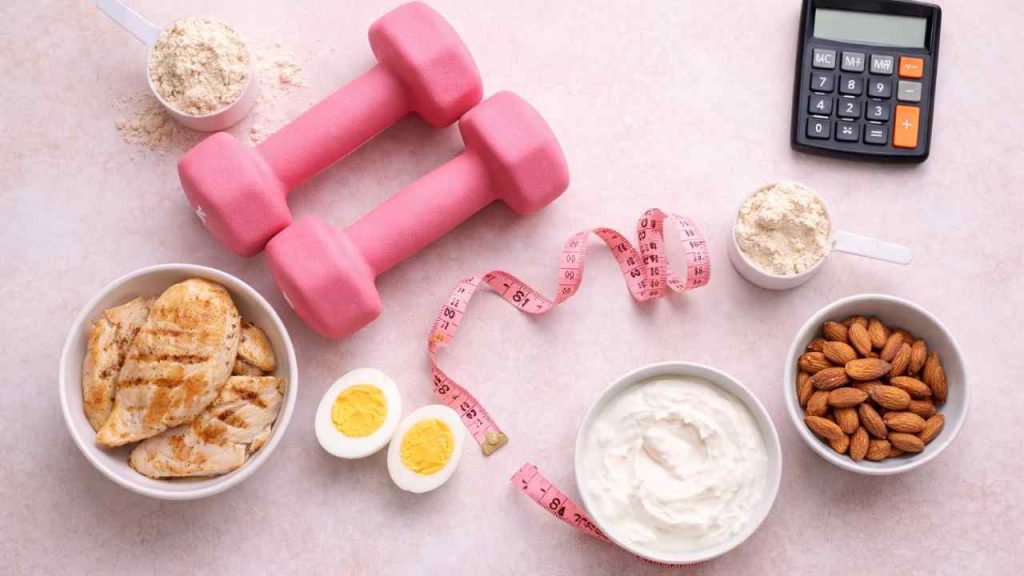
Not Sure How Much Protein You Need?
Reading about protein is helpful.
But every woman’s body is different.
Your protein needs depend on:
- Your body weight
- Activity level
- Whether you do strength training
- Your fat loss goal
Instead of guessing, the smarter way is to use a protein calculator.
Why Use a Protein Calculator?
A protein calculator:
- Gives you a personalized daily protein target
- Prevents muscle loss during weight loss
- Helps you avoid eating too little or too much
- Makes meal planning easier
Many women under-eat protein simply because they don’t know their real requirement.
A calculator removes the confusion.
Especially Important for Women
Because women naturally have:
- Lower muscle mass
- Hormonal changes during the cycle
- Higher risk of muscle loss during dieting
Getting protein right is even more important.
That’s why many evidence-based coaches like recommend calculating protein based on body weight rather than guessing.
Try Our Free Protein Calculator
Protein Calculator for Women
How to Use the Protein Calculator
Using this calculator is very simple. Follow these steps:
Step Enter Your Body Weight
Type your current weight in kilograms (kg).
Example: If you weigh 60 kg, enter 60.
Step 2 Select Your Activity Level
Choose the option that matches your routine:
- Lightly Active → Light workouts 1–2 times per week
- Moderately Active → Exercise 3–4 times per week
- Strength Training → Lifting weights regularly
- Intense Training → Heavy workouts or athletic training
Step 3 Click “Calculate Protein
The calculator will instantly show:
Your recommended daily protein intake in grams.
Example:
If you weigh 60 kg and choose Strength Training (2.0)
60 × 2.0 = 120 grams of protein per day
Best High-Protein Foods for Women Losing Weight
| Food | Protein (per serving) | Calories | Why It’s Good for Weight Loss |
|---|---|---|---|
| Eggs (2 large) | 12g | 140 | High-quality protein, keeps you full longer |
| Chicken Breast (100g) | 31g | 165 | Lean protein, low fat, great for muscle tone |
| Greek Yogurt (1 cup, plain) | 17–20g | 100–120 | High protein, supports gut health |
| Cottage Cheese (1 cup) | 24g | 180 | Slow-digesting protein, reduces cravings |
| Salmon (100g) | 22g | 200 | Protein + healthy omega-3 fats |
| Lentils (1 cup cooked) | 18g | 230 | Plant-based protein, high fiber |
| Tofu (100g) | 8–12g | 90 | Low calorie, good vegetarian option |
| Chickpeas (1 cup cooked) | 14g | 270 | Protein + fiber for fullness |
| Whey Protein (1 scoop) | 20–25g | 110–130 | Quick and convenient protein source |
| Almonds (28g / 1 oz) | 6g | 160 | Healthy fats + protein, good snack option |
Common Mistakes Women Make With Protein
Women often make these protein mistakes when trying to lose weight:
Protein is essential for breakfast. This is a big mistake because it can cause blood sugar levels to drop and then destroy willpower. Many people eat too little protein, which makes them hungry and reduces muscle mass, which slows down their metabolism.
Finally, there is the unfounded fear of getting "big" - but getting enough protein can help you achieve that lean, toned look by preserving muscle while burning fat.
FAQ
How much protein should a 40-year-old woman eat to lose weight
For a 40-year-old woman aiming to lose weight, most experts recommend consuming 1.0 to 1.2 grams of protein per kilogram of body weight daily
Is too much protein bad for women?
The short answer is yes, it is possible for women to eat too much protein, but it's also important to know that "too much" is a very high amount for most people
Can I lose weight without eating a high-protein diet?
You don't need to follow an extreme "high-protein" diet, but completely neglecting protein can make the process harder. A moderate protein approach is often the sweet spot for women.
Conclusion
The most important thing is that protein is your partner in weight loss, not your enemy. It helps protect your hard-earned muscle, encourages your body to burn stored fat as fuel, and gives you a lean, toned look.
Now you don't have to struggle to figure out how much protein you need, I've created a simple protein calculator to do the math for you. Find your protein number and start your weight loss journey.