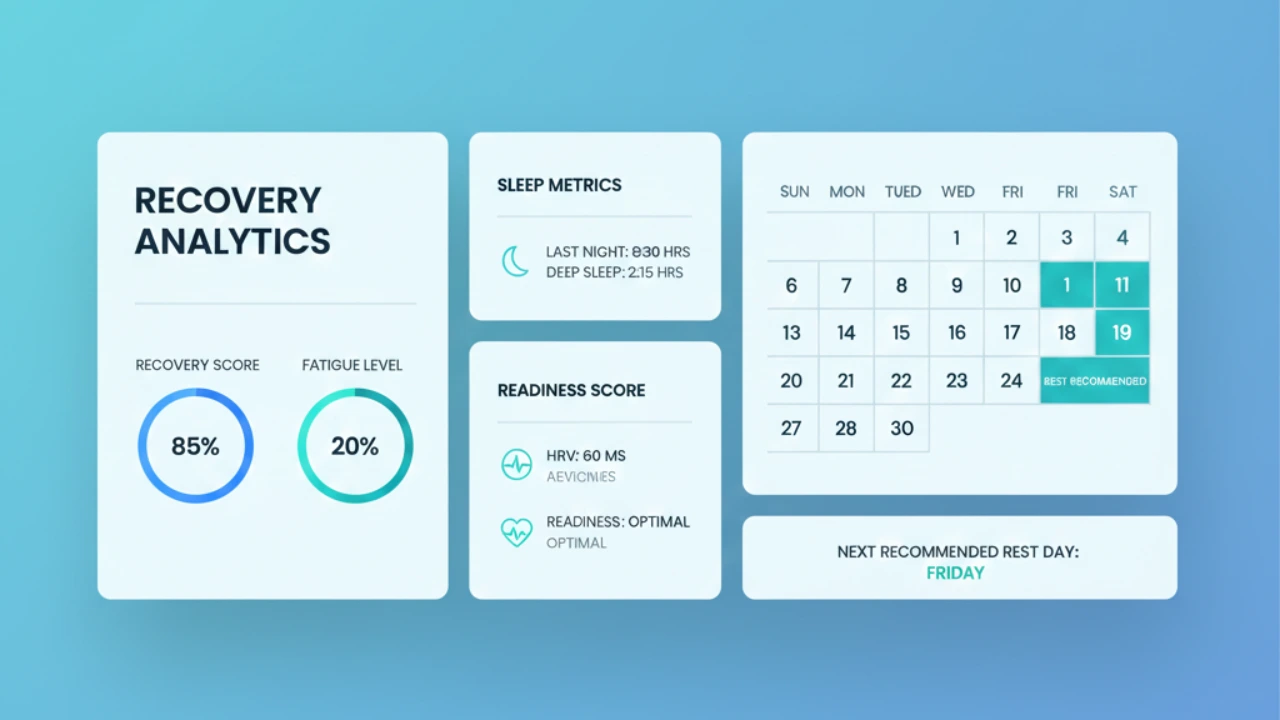
You train your body regularly for muscle growth and you eat enough protein. You never miss a workout. Is this good? Why is the answer no?.Often the problem is a lack of rest, not a lack of effort, that causes your body to feel tired, muscles to remain sore, and lack of progress.
It’s important to figure out how much rest you need. There’s a calculator to help you figure it out, and you can learn how to use it here.
The Big Myth: “More Training Is Always Better”
Training breaks your muscles down.
Rest builds them back stronger.
If you don’t rest enough, your body stays tired all the time. This leads to:
- Same weights, no progress
- Higher injury risk
- High stress hormones (cortisol)
- Low motivation and burnout
A Rest Day Calculator makes rest planned and smart, not random.
What Does a Rest Day Calculator Look At?
It doesn’t use just one formula.
It checks multiple recovery signals from your body.
1. Training Stress
- Heavy workouts = more rest needed
- High volume or intensity = more recovery time
2. Recovery Signals (Very Important)
- Sleep: Less sleep = slower recovery
- Resting Heart Rate (RHR): Higher than normal = fatigue
- HRV (Heart Rate Variability): Lower than usual = stress
- Muscle Soreness (DOMS): Mild vs painful
- Energy & Mood: Do you feel fresh or exhausted?
A good rest decision asks:
“Will today’s workout help me grow—or just make me more tired?”

How to Create Your Own Rest Day Formula
Step 1: Check the Basics (Morning Check)
Ask yourself:
- Did I sleep less than 7 hours?
- Are my muscles very sore (7/10 or more)?
- Is my resting heart rate higher than normal?
👉 If 2 or more answers are YES, take a rest or deload day.
Rest Day Calculator
Step 2: Check Your Mind & Energy
Ask:
- Do I feel tired even before thinking about training?
- Am I irritated or unmotivated?
- Do warm-up sets feel heavy and slow?
👉 If YES, your body needs rest—even if sleep was okay.
Step 3: Check Recent Training Load
- Have I trained hard 3–4 days in a row?
- Is today another heavy workout?
👉 Many hard days in a row = higher rest need.
Rest Is Not Just “Doing Nothing”
A Rest Day Calculator doesn’t always mean lying on the couch.
Types of Rest:
1. Full Rest Day
- No gym
- Light walking only
- Best when very tired, sick, or injured
2. Active Recovery
- Walking, yoga, light cycling
- Improves blood flow
- Reduces soreness
3. Deload Week
- Planned rest every 4–8 weeks
- Reduce training volume by 40–60%
- Prevents burnout and injury
4. Technique / Mobility Day
- Practice form
- Stretching
- Very light weights
Common Mistakes With Rest
❌ Resting Too Little
- Leads to overtraining and injuries
❌ Resting Too Much
- Complete inactivity can cause stiffness
- Active recovery is often better
❌ Ignoring Pain
- Training through joint pain is dangerous
- Pain ≠ soreness
Example: Alex’s Rest Day Decision
Alex is in Week 5 of heavy training.
Today is squat day.
Morning Check:
- Sleep: 6 hours ❌
- Resting heart rate: higher than normal ❌
- Leg soreness: 8/10 ❌
- Mood: tired and unmotivated ❌
- Training days: 4 hard days in a row ❌
Decision:
Too many warning signs.
Smart Choice:
✔ Full rest day
✔ Eat well
✔ Hydrate
✔ Light walk
Result:
Next workout is stronger and safer.
Simple Action Plan
- Do a 1-minute morning check daily
- Rate sleep, soreness, and energy (1–10)
- Set rules (example: “Poor sleep + high soreness = rest”)
- Plan rest days in advance
- Schedule deload weeks every 4–8 weeks
- Learn the difference between soreness and pain
Final Thoughts
A Rest Day Calculator is not about being lazy.
It’s about being smart.
Training is only half the process.
Recovery completes it.
The strongest people aren’t those who train every day.
They’re the ones who rest well enough to make every workout count.
FAQ
Q: Will I lose muscle if I rest?
No.
Muscle loss starts after 2–3 weeks of no activity.
Rest days actually help muscle growth.
Q: How can I track HRV and resting heart rate?
Smartwatches like:
- Apple Watch
- Garmin
- Whoop
- Oura Ring
Or apps like Elite HRV
Measure in the morning for best accuracy.
Q: I feel guilty resting. What should I do?
Change your mindset.
Rest is not skipping work.
Rest is part of the work.
No recovery = no results.


